How Wedge Wire Screen Withstand Higher Water Pressure
Wedge wire screen, essential components in water intake, filtration, and drainage systems, often face extreme hydraulic pressure in deep wells, offshore operations, or high-pressure industrial environments. To ensure reliability and longevity under such conditions, structural reinforcement is critical. Here’s how different reinforcement strategies are applied based on pipe diameter, along with the resulting performance benefits.
1. For Small-Diameter Screens: Internal Ribs and Stiffeners
Small-diameter screens (typically below 200 mm) are often reinforced with internal ring ribs and longitudinal stiffeners.
-
Ring ribs are welded or formed circumferentially along the inner wall at regular intervals. These ribs act like internal “hoops” that resist radial deformation caused by external water pressure.
-
Longitudinal stiffeners run along the pipe’s inner length, preventing buckling or bending under axial loads.
Why this works:
The combination creates a grid-like support system, significantly increasing the moment of inertia and distributing stress evenly. This is similar to how a corrugated or ribbed metal hose maintains flexibility while resisting collapse under vacuum or pressure.
2. For Large-Diameter Screens: Internal Helical Support Rings
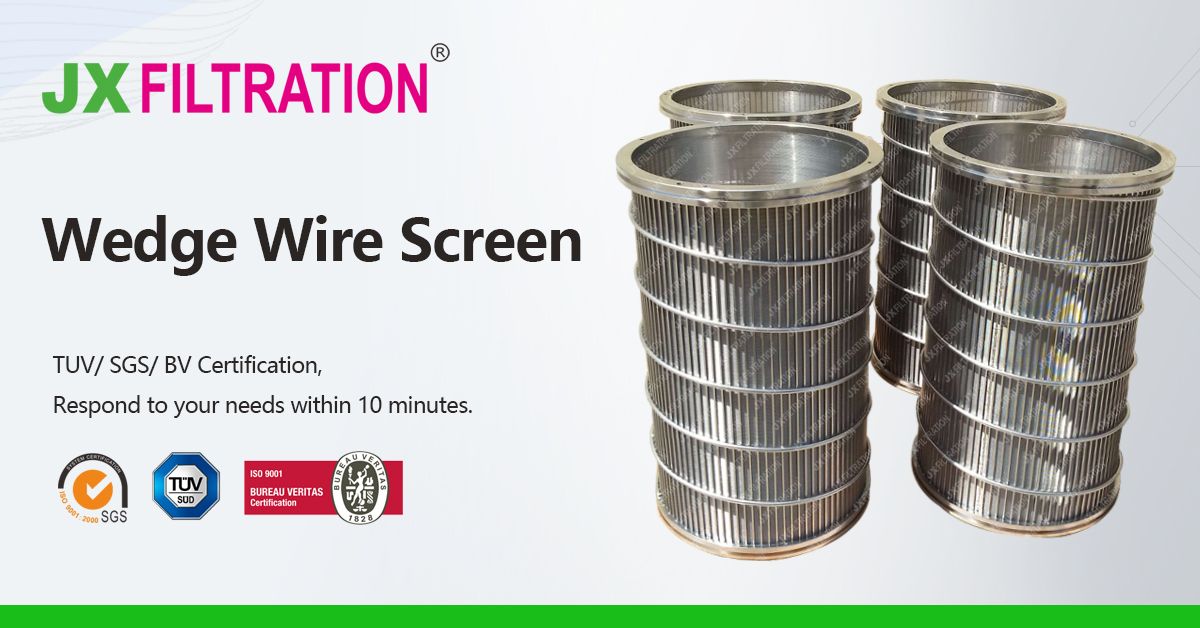
For screen with larger diameters (above 200 mm), a helical support ring (or spiral stiffener) is often the preferred reinforcement.
-
This ring is welded in a continuous spiral along the inner wall, forming a rigid, lightweight, yet highly resilient internal framework.
-
The helical design offers uniform load distribution in all directions—radial, axial, and torsional—much like the structure of a steel auger or a reinforced concrete spiral column.
Why this works:
The helical ring provides 360° structural continuity, minimizing localized stress points. It also maintains excellent flow characteristics inside the pipe, which is crucial for high-volume applications.
Why These Reinforcements Enhance Pressure Resistance
Both methods improve hoop strength—the ability to resist bursting under internal or external pressure—by:
-
Increasing wall stiffness without adding excessive weight
-
Preventing ovalization or flattening of the pipe cross-section
-
Enhancing fatigue resistance under cyclic loading (e.g., variable pump pressure)
Where Such Reinforced Screen Pipes Are Essential
These structurally enhanced screen pipes are indispensable in demanding environments such as:
-
Deep well drilling (>300 meters), where hydrostatic pressure exceeds 3 MPa
-
Subsea installations, requiring resistance to external water pressure and dynamic loads
-
Hydraulic fracturing water supply systems, where pressure spikes are frequent
-
High-pressure backwash filtration systems in desalination or wastewater reuse plants
-
Geothermal fluid extraction, involving high temperatures and pressures
Conclusion: Engineering for Pressure, Designed for Purpose
Whether through internal ribs for small diameters or helical rings for large ones, reinforcing screen pipes is a tailored engineering process. By matching the reinforcement strategy to the pipe size and application environment, manufacturers can deliver screens that not only withstand higher water pressure but also offer longer service life and lower lifecycle costs.
Any requirements, contact us now!
Grace
Email: grace@filtrationchina.com
Mobile/Whatsapp/WeChat: +86 17269571160