What is Sieve Bend Screens: Applications & Advantages
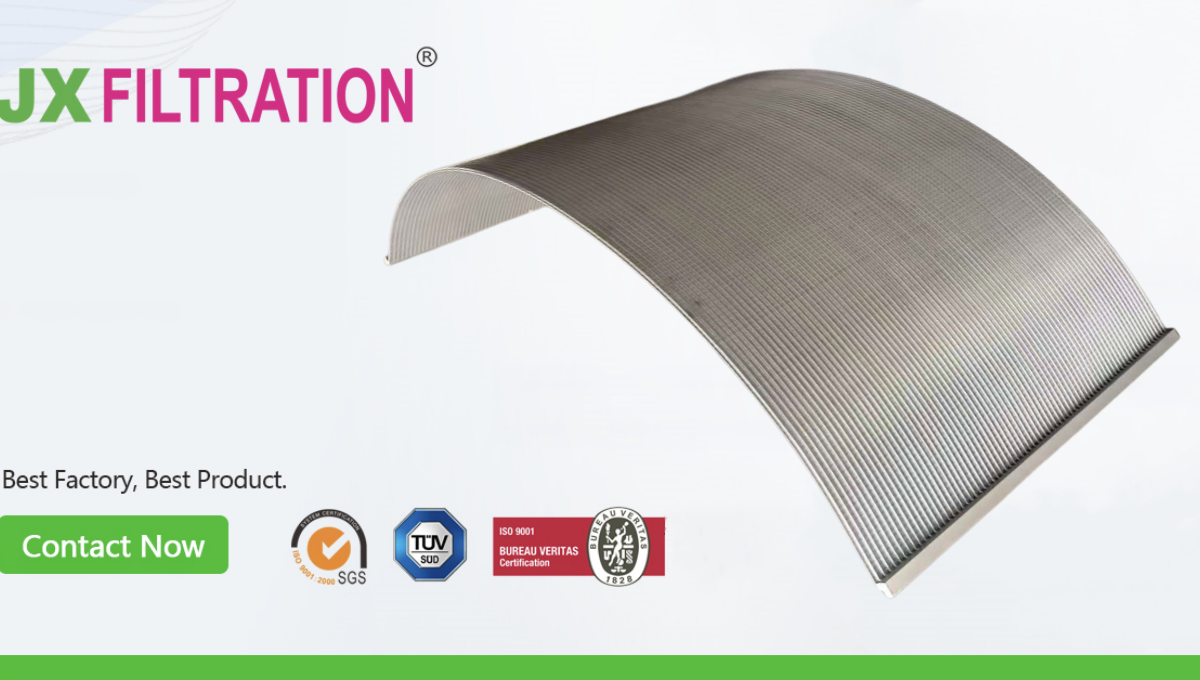
A sieve bend screen—also known as a DSM screen—is a stationary screening device with an arc-shaped profile made of wedge wire. It is widely used across industries for efficient solid-liquid separation and classification of fine particles.
Key Applications
Sieve bend screens are versatile and found in many sectors:
-
Mining & Mineral Processing: Used for dewatering, desliming, and recovering valuable minerals from slurry streams.
-
Pulp & Paper: Essential for recovering fibers from white water, thickening pulp, and removing contaminants.
-
Wastewater Treatment: Removes suspended solids and reduces the processing load of downstream equipment.
-
Food Processing: Applied in starch production, corn wet milling, and fruit/vegetable wastewater cleanup.
-
Chemical & Industrial: Employed in coal preparation, textile plants, and sugar processing.
Core Advantages
-
No Moving Parts & Low Maintenance: The static design eliminates mechanical complexity, leading to minimal upkeep and low operating costs.
-
No Power Required: Most sieve bends operate purely by gravity, significantly reducing energy consumption.
-
High Capacity & Efficiency: The curved surface uses gravitational forces to process more material than flat screens, with a self-cleaning action that prevents blinding and ensures continuous operation.
-
Durable Construction: Made from wear- and corrosion-resistant materials like wedge-wire stainless steel, they perform reliably in abrasive environments.
-
Precise Separation: Wedge-wire design allows for very fine slot openings, enabling accurate particle size classification.
In summary, sieve bend screens deliver an effective, low-cost, and energy-efficient solution for countless industries.
Any requirements, contact us now!
Grace
Email: grace@filtrationchina.com
Mobile/Whatsapp/WeChat: +86 17269571160